
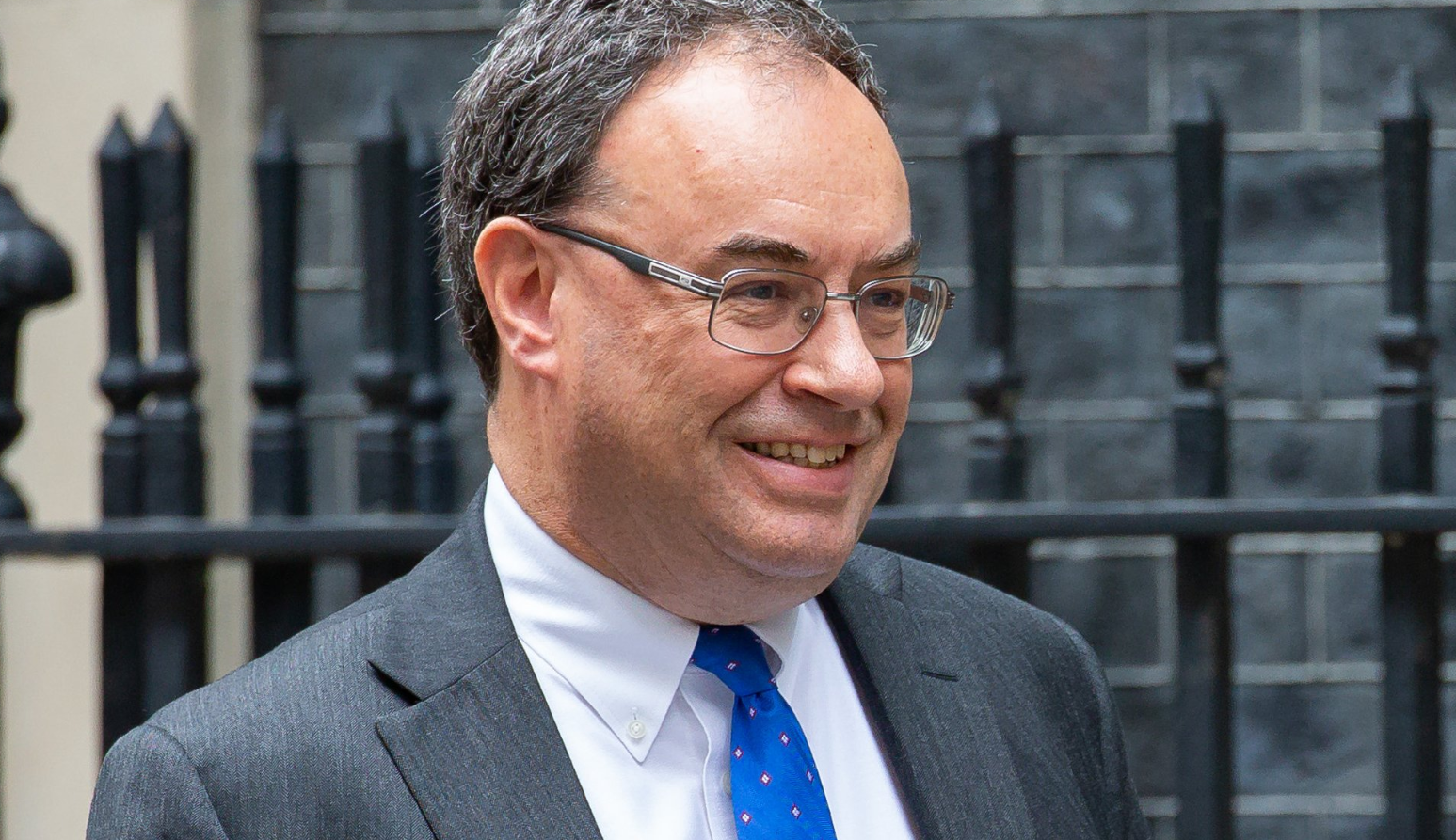
Andrew Bailey is a British central banker who has spent much of his professional life working at the center of the United Kingdom’s financial system. As Governor of the Bank of England, he holds one of the country’s most important economic positions, with responsibilities connected to monetary policy, financial stability, banking regulation, and the broader functioning of the British economy. His career has placed him inside major financial institutions during periods of extraordinary economic change.
Bailey was born in Leicester and studied at Queens’ College, Cambridge. He earned a first-class degree in history before completing a doctorate in economic history. His academic background is notable because his route into central banking was not based solely on conventional economics training; historical analysis also played an important role in his education.
After working as a research officer at the London School of Economics, Bailey joined the Bank of England in 1985. This marked the beginning of a long career involving numerous areas of banking, monetary analysis, supervision, and financial regulation. Over time, he accumulated experience across both the operational and policymaking sides of central banking.
His early responsibilities included work on international capital markets and developing-country debt. He also spent time working with the Federal Reserve Bank of New York, giving him exposure to the international dimensions of financial markets. These experiences were particularly relevant as financial systems became increasingly interconnected across national borders.
Bailey later moved into banking supervision, where he worked on policies designed to ensure that financial institutions remained resilient and properly managed their risks. Banking supervision may receive less public attention than interest-rate decisions, but it is fundamental to economic stability. Weaknesses inside major financial institutions can rapidly spread throughout an economy, as demonstrated dramatically during the global financial crisis.
Throughout his career at the Bank of England, Bailey held a variety of senior positions. He served as Private Secretary to the Governor, headed the International Economic Analysis Division, became Executive Director for Banking Services, and served as Chief Cashier. His signature therefore appeared on Bank of England banknotes during his period as Chief Cashier.
The global financial crisis of 2007–2009 became one of the defining periods of his professional life. Bailey was closely involved with the Bank’s work on resolving troubled financial institutions and strengthening banking supervision. The crisis fundamentally changed the regulatory landscape in Britain and internationally, leading governments and central banks to reconsider how banks should be supervised and how failures should be managed.
Following regulatory reforms in the United Kingdom, Bailey became the first Chief Executive of the Prudential Regulation Authority and Deputy Governor of the Bank of England for Prudential Regulation in 2013. The PRA was given responsibility for supervising important financial institutions, including banks and insurers, making Bailey one of Britain’s most influential financial regulators.
In 2016, he became Chief Executive of the Financial Conduct Authority. The FCA has broad responsibilities for regulating financial markets and protecting consumers, placing Bailey in a role that required him to address questions ranging from institutional conduct to the treatment of individual customers.
In December 2019, the British government announced that Bailey would succeed Mark Carney as Governor of the Bank of England. He formally began his term on March 16, 2020, an extraordinary moment because the COVID-19 pandemic was rapidly developing into a global economic emergency.
The timing meant that Bailey’s governorship began under conditions few central bankers would normally expect to face immediately after taking office. Economic activity fell sharply as pandemic restrictions affected businesses, travel, employment, and consumer activity. Central banks around the world responded with exceptional monetary measures intended to protect financial stability and support economic activity.
The years that followed brought a different challenge: inflation. Supply-chain disruption, changes in global demand, energy-market pressures, and geopolitical developments contributed to substantial increases in consumer prices. The Bank of England consequently faced the difficult task of tightening monetary policy while households and businesses were already experiencing rising living costs.
Interest-rate decisions are among the most visible responsibilities of a modern central bank. Raising rates can help reduce inflationary pressure, but it can also increase mortgage payments and borrowing costs while weakening economic activity. Bailey therefore became a prominent figure in public discussions about inflation, wages, economic growth, and household finances.
As Governor, Bailey chairs several of the Bank’s key policymaking bodies, including the Monetary Policy Committee, Financial Policy Committee, Prudential Regulation Committee, and Financial Market Infrastructure Committee. His current term is scheduled to run until March 2028.
Central bank independence is an important element of Bailey’s role. The Bank of England operates independently when making monetary-policy decisions, even though its mandate is established within a political and legal framework. This structure is designed to prevent short-term political pressures from determining interest rates while still ensuring institutional accountability.
Communication is therefore a major part of the governor’s responsibilities. Financial markets, businesses, homeowners, investors, and governments carefully analyze statements from the Bank of England for indications about future policy. A single change in wording can influence expectations, making precise communication an important instrument of monetary policy itself.
Bailey’s long career also provides an example of institutional continuity. Rather than arriving at the Bank of England from politics or corporate leadership, he spent decades working within Britain’s regulatory and central-banking architecture. His experience includes monetary analysis, bank supervision, crisis management, consumer regulation, and senior institutional leadership.
Like any central banker operating during periods of economic difficulty, Bailey has faced criticism from different directions. Decisions concerning inflation and interest rates inevitably create winners and losers, and debates about whether monetary policy acted too quickly or too slowly are common. Such disagreements are part of the broader public discussion surrounding central-bank accountability.
Andrew Bailey’s significance ultimately comes from the unusual range of financial challenges he has encountered. From banking supervision and the global financial crisis to Brexit-era uncertainty, the pandemic, and subsequent inflationary pressures, his career has coincided with repeated transformations in the British and international financial systems.
Today, as Governor of the Bank of England, Bailey remains one of the most influential figures in British economic policy. His decisions affect borrowing, saving, investment, financial institutions, and economic expectations across the country. His career demonstrates how central banking combines technical expertise with crisis management, institutional leadership, and the difficult task of making decisions whose consequences can reach virtually every household and business in the economy.
Want to know more?
Buy a copy of this newspaper to read the full story.