
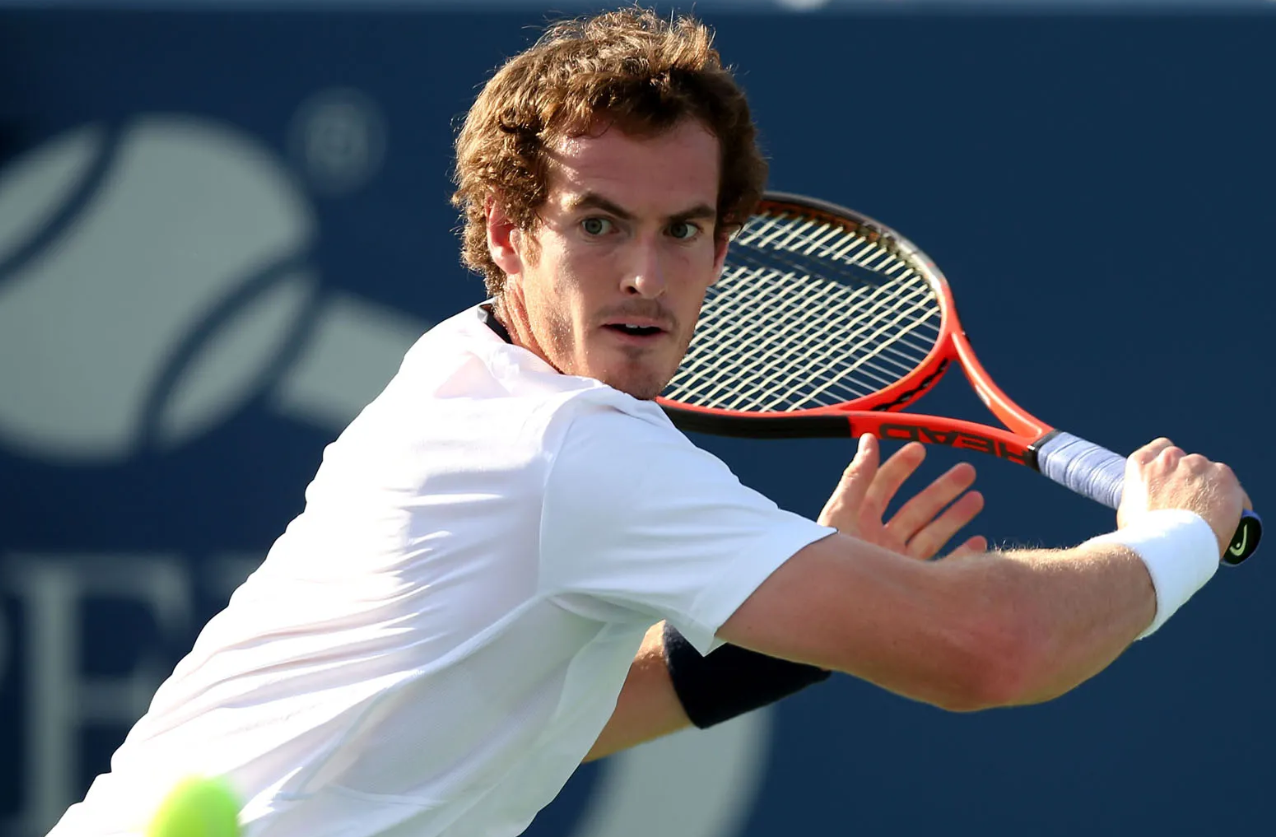
Andy Murray is one of the most accomplished tennis players in British sporting history. Known for his exceptional defensive skills, tactical intelligence, determination, and ability to compete against some of the greatest players the sport has ever produced, Murray built an extraordinary career during one of the most competitive eras in men’s tennis. His victories at Wimbledon, the US Open, the Olympic Games, and numerous other major tournaments transformed him into an internationally recognized sporting figure and ended several long-standing records for British men’s tennis.
Born Andrew Barron Murray on May 15, 1987, in Glasgow, Scotland, Murray grew up in Dunblane. His mother, Judy Murray, was a tennis coach, and both Andy and his older brother Jamie were introduced to the sport at an early age. Jamie would later establish his own successful professional career, particularly in doubles, making the Murray family an important part of modern British tennis.
Andy demonstrated exceptional athletic ability as a child. Tennis eventually became his primary focus, although he was also a talented football player. His decision to pursue tennis seriously required considerable commitment, particularly because Britain did not have the same established development system as some other major tennis nations.
As a teenager, Murray moved to Spain to train at the Sánchez-Casal Academy near Barcelona. The experience exposed him to different coaching methods, stronger competition, and the demanding routines required of an aspiring professional athlete. Training on clay also contributed to the development of his movement, patience, and ability to construct points.
Murray began his professional career in the early 2000s and quickly attracted attention as one of Britain’s most promising young players. His combination of speed, anticipation, returning ability, and tactical awareness distinguished him from many opponents. Rather than relying exclusively on overwhelming power, Murray became known for analyzing matches carefully and finding ways to disrupt an opponent’s preferred style.
As he climbed the rankings, expectations surrounding him increased dramatically. Britain had waited decades for a male singles champion at Wimbledon, and every appearance Murray made at the tournament generated enormous media attention. The pressure surrounding his career was therefore unusual even by the standards of elite professional sport.
Murray reached his first Grand Slam singles final at the 2008 US Open, where he lost to Roger Federer. Further major finals followed, but winning one of tennis’s four Grand Slam tournaments initially remained elusive. His repeated appearances in the final stages of major events nevertheless demonstrated that he belonged among the world’s elite.
His breakthrough finally came at the 2012 US Open. Murray defeated Novak Djokovic in a demanding five-set final to claim his first Grand Slam singles title. The victory was a landmark moment in British tennis and confirmed that Murray could overcome the strongest players on the biggest stages.
The previous months had already demonstrated his ability to handle extraordinary pressure. At the 2012 London Olympic Games, Murray won the men’s singles gold medal, defeating Federer in the final at Wimbledon. Winning an Olympic title on the same court where he had experienced Grand Slam disappointment provided one of the most memorable moments of his career.
In 2013, Murray achieved the victory that had been anticipated throughout Britain for years. He defeated Novak Djokovic in the Wimbledon final, becoming the first British man to win the Wimbledon singles championship since Fred Perry in 1936. The significance of the achievement extended beyond tennis, turning the final into a major national sporting event.
Murray continued competing at the highest level and won Wimbledon for a second time in 2016. That season became one of the finest of his career. He also successfully defended his Olympic singles title in Rio de Janeiro, becoming the first tennis player to win two Olympic singles gold medals.
Later in 2016, Murray reached world No. 1 in the ATP rankings. Achieving the position was particularly remarkable because his career overlapped with Roger Federer, Rafael Nadal, and Novak Djokovic, three players widely considered among the greatest in tennis history. Murray’s ability to compete consistently against this group led to the era sometimes being described in terms of a “Big Four.”
His game was built around several exceptional strengths. Murray was one of the finest returners in professional tennis, capable of neutralizing powerful serves and immediately turning defensive situations into competitive rallies. His anticipation allowed him to cover the court efficiently, while his two-handed backhand became one of his most reliable weapons.
Tactical adaptability was equally important. Murray could vary pace, use defensive slices, attack the net, extend rallies, or become more aggressive depending on his opponent. This flexibility made him particularly difficult to defeat because he was rarely dependent on a single pattern of play.
The later stages of Murray’s career were heavily affected by hip problems. Chronic pain eventually threatened his ability to continue competing professionally. He underwent significant medical procedures, including hip resurfacing surgery, and at one stage publicly suggested that retirement might be approaching.
His subsequent return to professional competition became another defining chapter of his career. Playing elite tennis with a metal hip presented extraordinary physical challenges, yet Murray returned to tournament competition and achieved further victories. Although he was no longer consistently competing for Grand Slam championships, his determination attracted considerable admiration from fellow players and supporters.
Murray has also been recognized for speaking openly about equality within tennis. He repeatedly supported women’s tennis and female coaches, and he challenged assumptions about gender within sports coverage. His decision to work with former Grand Slam champion Amélie Mauresmo as his coach attracted significant attention and contributed to wider discussions about women coaching male athletes at the highest level.
His personality became an important part of his public image as well. Early in his career, Murray was sometimes portrayed as reserved or serious, but audiences gradually became more familiar with his dry humor and emotional honesty. The enormous pressure he experienced also encouraged broader conversations about the psychological demands placed on professional athletes.
By the time he concluded his professional playing career in 2024, Murray had created a legacy that extended well beyond his individual trophies. He had won three Grand Slam singles titles, two Olympic singles gold medals, reached world No. 1, and helped Great Britain win the Davis Cup.
Andy Murray’s career represents persistence as much as sporting excellence. He competed against historically great opponents, carried enormous national expectations, overcame repeated major-final disappointments, and later fought through serious physical limitations simply to continue playing the sport he loved.
His place in British sporting history is therefore secure. Murray did not merely end a long wait for a British men’s Wimbledon champion; he established himself as one of the outstanding tennis players of his generation. His intelligence, resilience, and competitive spirit transformed expectations surrounding British tennis and created a legacy likely to influence future generations of players.
Want to know more?
Buy a copy of this newspaper to read the full story.